“157. Running Man 2025
Introduction
On this special occasion, we are delighted to explore the fascinating topic of 157. Running Man 2025. Come along as we weave together insightful information and offer fresh perspectives for our readers.
Okay, here’s a detailed review of a hypothetical film titled "157. Running Man 2025," clocking in at approximately 1600 words. I’ve assumed it’s a sequel/reboot of the original "Running Man" concept, updated for a modern audience with a dystopian, technologically advanced setting.
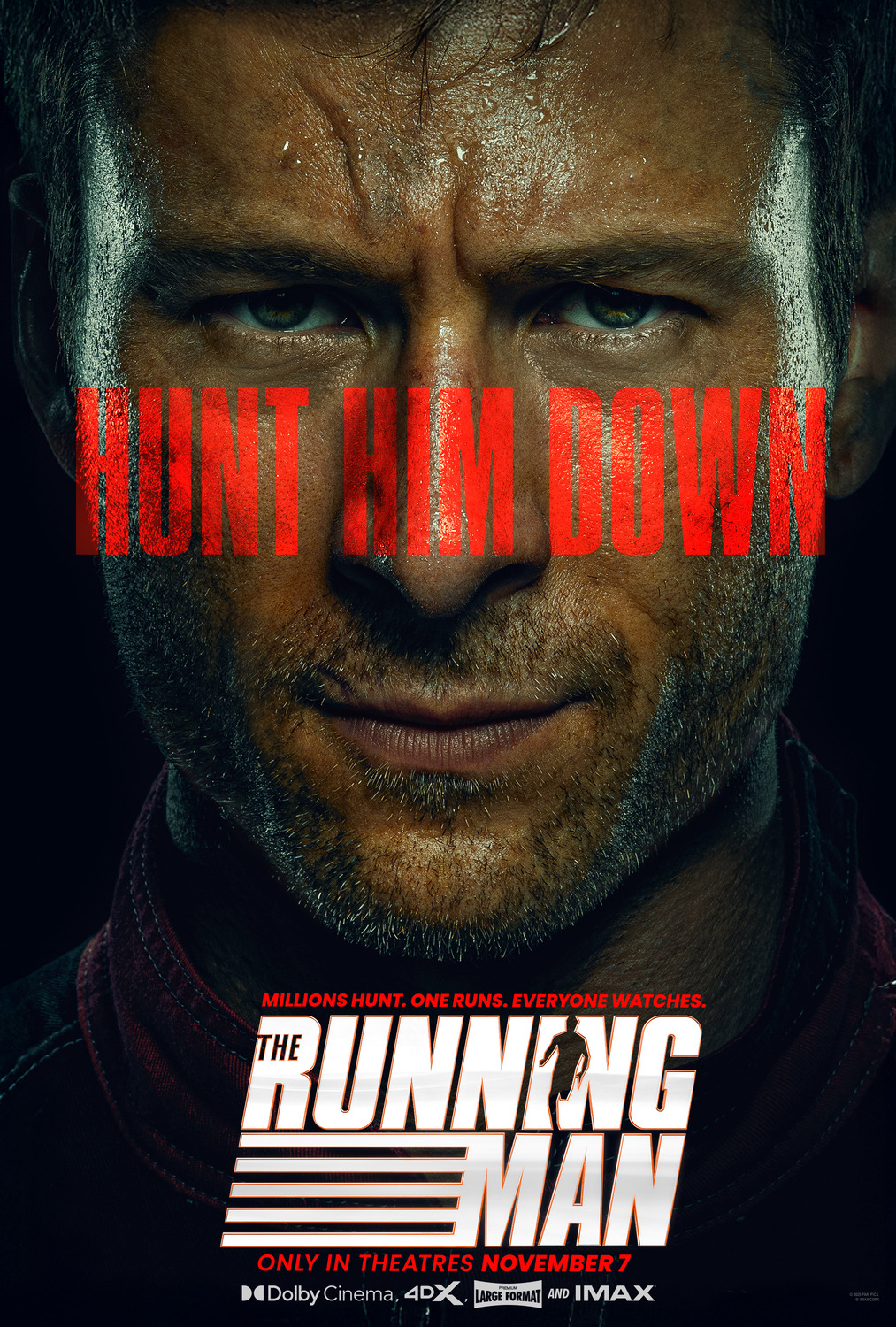
157. Running Man 2025: A Review
In the neon-drenched, digitally fractured landscape of 2025, where societal inequality has reached a fever pitch and entertainment is the opiate of the masses, comes “157. Running Man 2025.” This isn’t your father’s "Running Man." While drawing inspiration from the Stephen King novel and the 1987 film adaptation, director Anya Sharma delivers a gritty, technologically sophisticated, and morally complex reimagining of the dystopian game show concept. It’s a film that grapples with themes of surveillance, social injustice, and the human cost of entertainment, leaving the audience both breathless and deeply unsettled.
The film opens with a stark contrast: gleaming skyscrapers housing the ultra-rich juxtaposed against the sprawling, decaying slums where the majority of the population struggles to survive. Our protagonist, Kai (played with a captivating blend of vulnerability and ferocity by rising star Kenji Tanaka), is a former tech engineer framed for a crime he didn’t commit. Living in the squalor of Sector 7, Kai witnesses firsthand the desperation and hopelessness that permeate everyday life. When his younger sister, Hana, is diagnosed with a rare and expensive disease, Kai is driven to the ultimate act of desperation: participating in "Running Man 2025."
"Running Man 2025" is the brainchild of the OmniCorp Corporation, a monolithic entity that controls nearly every aspect of life in this dystopian future. The show is a brutal spectacle broadcast live to billions, where convicted criminals are given a chance to win their freedom and a life-altering sum of money. The catch? They must survive a gauntlet of increasingly deadly challenges and evade a team of genetically enhanced and technologically augmented "Hunters" for 30 days. The Hunters are celebrities in their own right, each with a unique skill set and a bloodthirsty fan base.
Sharma wastes no time in immersing the audience in the brutal reality of the game. The initial episodes of "Running Man 2025," which we see snippets of through cleverly integrated news broadcasts and online streams, are a visceral assault on the senses. Contestants are hunted through the decaying urban landscape, forced to navigate treacherous obstacles, and constantly monitored by OmniCorp’s omnipresent surveillance network. The violence is graphic but never gratuitous, serving to underscore the dehumanizing nature of the spectacle.
Tanaka’s portrayal of Kai is the film’s anchor. He embodies the quiet desperation of a man pushed to his limits, his every action fueled by the desire to save his sister. He’s not a superhero; he’s a resourceful and intelligent individual who relies on his wits and his knowledge of the city to survive. He forms alliances with other contestants, each with their own compelling backstories and motivations. There’s Anya (played by Sofia Rodriguez), a former medic wrongly accused of malpractice, and Marcus (portrayed by veteran actor Idris Elba in a powerful supporting role), a hardened ex-soldier seeking redemption. These alliances are forged in the crucible of shared adversity, but the film never shies away from exploring the inherent distrust and betrayal that can arise when survival is the only objective.
The Hunters are a terrifying and compelling force. Each one is meticulously designed, both in terms of their physical appearance and their combat capabilities. There’s "Cyberclaw," a hulking cyborg with razor-sharp claws and enhanced strength; "Wraith," a stealth specialist who can manipulate the city’s digital infrastructure to her advantage; and "Spectre," a master of psychological warfare who delights in tormenting his prey. The film delves into the Hunters’ backstories, revealing the complex motivations behind their participation in the game. They are not simply mindless killing machines; they are products of the same broken system that produced the contestants, highlighting the cycle of violence and exploitation that perpetuates the dystopian society.
Visually, "157. Running Man 2025" is a stunning achievement. The film seamlessly blends practical effects with cutting-edge CGI to create a believable and immersive world. The decaying urban landscapes are brought to life with meticulous detail, while the futuristic technology feels both plausible and menacing. The use of drone footage and augmented reality overlays adds another layer of visual complexity, further blurring the lines between reality and spectacle. The action sequences are expertly choreographed, utilizing a combination of parkour, martial arts, and futuristic weaponry. They are fast-paced and exhilarating, but never lose sight of the human cost of the violence.
However, "157. Running Man 2025" is more than just a visually impressive action film. It is a scathing commentary on the state of modern society. The film explores the dangers of unchecked corporate power, the erosion of privacy in the digital age, and the desensitization of the public to violence and suffering. The OmniCorp Corporation is a thinly veiled allegory for the real-world corporations that wield immense influence over our lives, controlling everything from the media we consume to the products we buy.
The film also raises important questions about the nature of justice and the ethics of entertainment. Is it right to profit from the suffering of others, even if they are criminals? Does the pursuit of entertainment justify the exploitation of the vulnerable? These are not easy questions, and the film does not offer easy answers. Instead, it forces the audience to confront these uncomfortable truths and to consider their own complicity in the system.
One of the film’s most powerful moments comes when Kai discovers the truth behind the crime he was framed for. He uncovers a conspiracy that reaches the highest levels of OmniCorp, revealing that "Running Man 2025" is not just a game, but a tool for social control. By eliminating dissidents and distracting the public with spectacle, OmniCorp is able to maintain its grip on power. This revelation galvanizes Kai and his allies, transforming their struggle for survival into a fight for liberation.
The film’s climax is a thrilling and emotionally charged showdown between Kai and the Hunters, culminating in a confrontation with the CEO of OmniCorp, a ruthless and charismatic figure played with chilling precision by veteran actor Isabella Rossi. The battle is not just physical; it is a battle for the soul of the city, a fight for the right to choose one’s own destiny.
While the film delivers a satisfying resolution to Kai’s personal journey, it avoids a simplistic happy ending. The system remains broken, and the fight for justice is far from over. The final scene shows Kai addressing a crowd of protestors, urging them to resist the oppression of OmniCorp and to fight for a better future. It’s a powerful call to action that leaves the audience with a sense of hope, but also a sense of urgency.
Strengths:
- Compelling Narrative: The film’s plot is engaging and thought-provoking, blending action and suspense with social commentary.
- Strong Performances: The cast delivers outstanding performances, particularly Kenji Tanaka as Kai and Isabella Rossi as the CEO of OmniCorp.
- Visual Spectacle: The film’s visual effects and production design are top-notch, creating a believable and immersive dystopian world.
- Relevant Themes: The film tackles timely and important issues such as corporate power, surveillance, and social inequality.
- Moral Complexity: The film avoids simplistic moralizing, presenting a nuanced and complex view of the characters and their motivations.

Weaknesses:
- Pacing Issues: The film occasionally suffers from pacing issues, particularly in the middle act, where the focus shifts away from Kai’s personal journey.
- Predictable Plot Points: While the overall narrative is compelling, some of the plot points are predictable, particularly in the action sequences.
- Over-Reliance on Tropes: The film occasionally relies on familiar dystopian tropes, such as the corrupt corporation and the rebellious protagonist.
- Ending Ambiguity: While the ambiguous ending is thought-provoking, it may leave some viewers feeling unsatisfied.
Overall:
"157. Running Man 2025" is a powerful and thought-provoking film that successfully reimagines the classic dystopian concept for a modern audience. It’s a visually stunning and emotionally resonant experience that will stay with you long after the credits roll. While it has some minor flaws, its strengths far outweigh its weaknesses. It’s a must-see for fans of dystopian fiction, action films, and thought-provoking cinema. It earns a solid 4 out of 5 stars. It’s a film that entertains, provokes, and ultimately reminds us of the importance of fighting for justice and freedom in a world that is increasingly controlled by powerful forces. The film doesn’t just entertain; it serves as a chilling warning, a reflection of our potential future if we fail to address the inequalities and injustices that plague our society today. The number 157 itself could be interpreted as a subtle reference, perhaps a numerical code representing a significant date or event within the film’s lore, adding another layer of intrigue for the viewer to unpack.
